Conor McGill: A Story of Technology, Humanity, and Discovery
Earlier this year, Conor McGill — a technology executive and advisor to Project Zawadi — traveled to rural Tanzania to work alongside our team and teachers on an early-stage AI-powered lesson planning tool.
His goal was simple: to explore whether emerging technology could help teachers spend less time preparing lessons and more time teaching.
What he found was something deeper.
Below is his personal reflection on that experience — from classrooms in Mara Region to the broader questions of how technology, education, and human connection intersect.
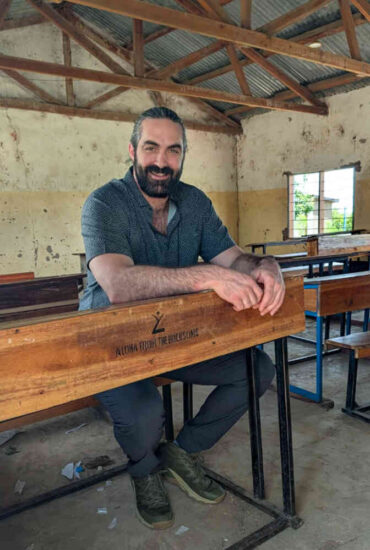 A friend recently asked me a simple question: how was this trip personally significant? As I began answering, a few sentences quickly turned into something more.
But first – why go on this trip at all? Since last year I’ve been serving as technology advisor to Project Zawadi. The organization has roots in Minnesota – its founder and board of directors are based there – and has offices in Arusha (administrative) and Nyamuswa (field operations) supported by a full time staff of more than 35 Tanzanian professionals.
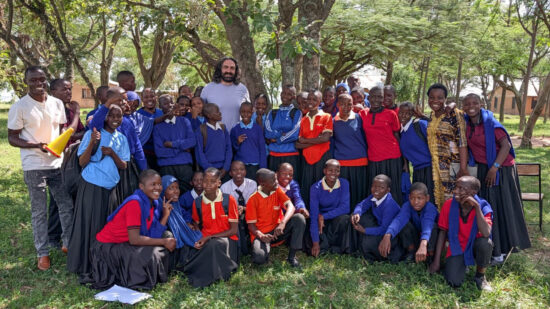
My advisory role is centered on building an AI-powered lesson planning tool for teachers in the rural Mara Region of Tanzania. The first five days in country were spent rolling out the Phase I prototype from the field operations office in Nyamuswa. My initiatives for this part of the trip were to make firsthand observations of the technology landscape in the schools, learn more about the needs of the teachers from the Zawadi Staff, and to show the prototype of the tool to select teacher groups, soliciting feedback.
All three initiatives were achieved, and most importantly the concept was validated by the Zawadi staff and teachers, which means we will move forward with Phase II of the project. 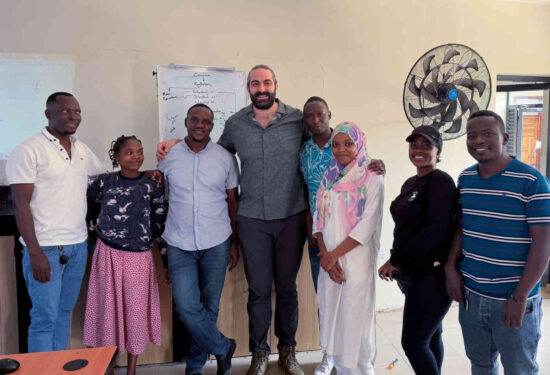
This project is anchored in the simple assumption: if teachers have better tools to create lesson plans aligned with national standards and effective teaching strategies, they can deliver stronger learning experiences for students. All the insight gained on this trip validated the assumption and gave me optimism that this tool could be rolled out and adopted by teachers. The key constituents in the rollout will be the Tenda Teachers Coordinators, the field staff who work with teachers every day to provide resources and a layer of accountability not currently instituted by the government.
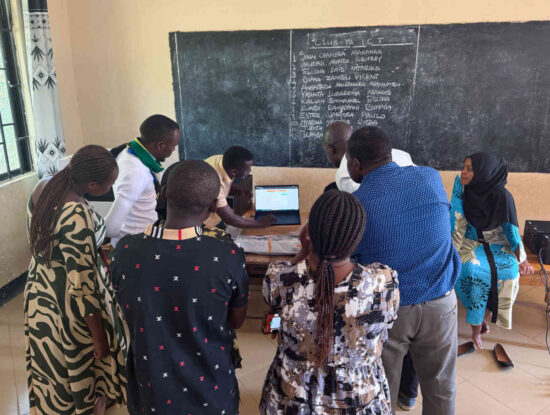
As most of my contact with the organization up-to-now was with the board and Nehemiah, the Tenda Program Manager – it was unclear how much buy-in there was from the boots-on-the ground staff. My interaction with the staff not only reinforced the key assumption, but made me come to understand this project as not just for the teachers and students, but also a professional development exercise for the Tenda Coordinators. There is a curiosity about this technology and what impact it could have on the Zawadi mission, and their own careers, that was an exciting new dimension to this project.
The excitement I experienced about the project and my presence there, everyone’s willingness to collaborate and the open invitation for me, a stranger from a foreign land, to participate equally in the mission from minute one, was extraordinary. With each meeting and activity, the vibrancy of Project Zawadi’s organizational culture came into focus.
Playing a role in an endeavor that is bigger than yourself – be it a sports team, a band, a company, a non-profit – where your passion and experience align with the goals of the organization is a profound joy and something that I seek out actively. I consider myself exceedingly fortunate when I am afforded those opportunities, thus the prevailing emotional association with my experience in Nyamuswa is gratitude.
Brian Singer, a Peace Corps teacher from Minnesota, founded Project Zawadi in 2000, and shortly after co-founded Access2Tanzania – an ecologically and socially responsible Safari guiding business. The two organizations operate symbiotically. Safari customers learn about and support Project Zawadi. Students who come up through Project Zawadi schools have a career pathway to a great job. These are just a few of the ways I was able to observe the organizations supporting each other. What struck me was the sense of purpose and pride exuded by everyone at both organizations.
In my case, this tandem offered a once-in-a-lifetime opportunity to work on a humanitarian project and go on a thrilling solo safari during an action-packed two-week period.
I left the village and the Zawadi staff after a week of constant motion, collaboration, and progress. Switching gears (specifically to 4L on our magnificent 2003 Toyota Land Cruiser Arusha Edition – named Tallula), I spent the second half of the trip on a safari with my magnificent guide David Mark.
The extent of my photography practice has been, up until now, haphazardly pointing my cellphone camera at points of mild interest that I happened upon. When I signed up for the safari, it did not occur to me to bring a digital camera – in fact I did not own one. In retrospect, my whim to purchase a camera the day before leaving for Africa was serendipitous in the extreme. Not only did it add a delightful dimension of creativity to the animal sightings and allowed me to fill downtime tinkering and learning (two of my favorite things), but my headfirst dive into the world of iso, f-stop, shutter speed, and white balance opened something unexpected. Travel photography has amalgamated with the Zawadi AI-software development, and PIXERA – my professional occupation – to inspire my next side project. More on that to come!
Camera in hand, riding shotgun in Tallula, we began our safari adventure in Serengeti National Park. From our first minute in the park we were treated to the most spectacular bonanza of flora and fauna imaginable – in fact it was beyond my imagination. The biodiversity and the natural beauty of the surroundings demand your humility and wonder – both were freely given.
Over the next few days, the details begin to blur together — vast landscapes, wildlife beyond anything I had imagined, and long stretches of time simply observing. Each place was different, but the sense of scale and beauty was constant.
The trip finished in Arusha, the biggest city in the region, site of the region’s primary Kilimanjaro International Airport, home to my guide David Mark, and the location of Access2Tanzania and Project Zawadi offices – which we visited.
It happened to be both Ash Wednesday and the second day of Ramadan, which rendered salient the city’s vibrant religious pluralism. Taqiyah and Hijab adorned the Muslims streaming from Mosques, while the Christians sported their annually ash-smudged foreheads as they left schools and churches in droves.
This was my first time in Africa, which was a conspicuously empty region in my passport and an important milestone in my lifelong quest to be a Global Citizen in good standing. Although I’ve only scratched the surface of this continental world, I have experienced the predictable yet no less profound joy of knowing just a little bit more about the world and human nature that comes from plopping yourself somewhere so starkly different from one’s own life circumstances.
The decision to make this trip was not foregone. I did see some risk that I would arrive in Nyamuswa as a humored although ultimately unbidden contributor to the Zawadi mission; and that the Safari – although full of novel sensation – would feel vacant without someone to share it with.
On both accounts I can gladly report my anxieties were abjectly misplaced. The connections I made through the humanitarian work will reverberate through my work and home life. And the time in the wilderness afforded me many hours of meditative introspection and meta-cognition that have allowed me to envision my future with more clarity and excitement.
For those interested, I’ll share updates as this work continues to develop. If you’d like to learn more about Project Zawadi or how to support this work, I’d be happy to help connect you.
– Conor McGill